
The End of Reactive SEO
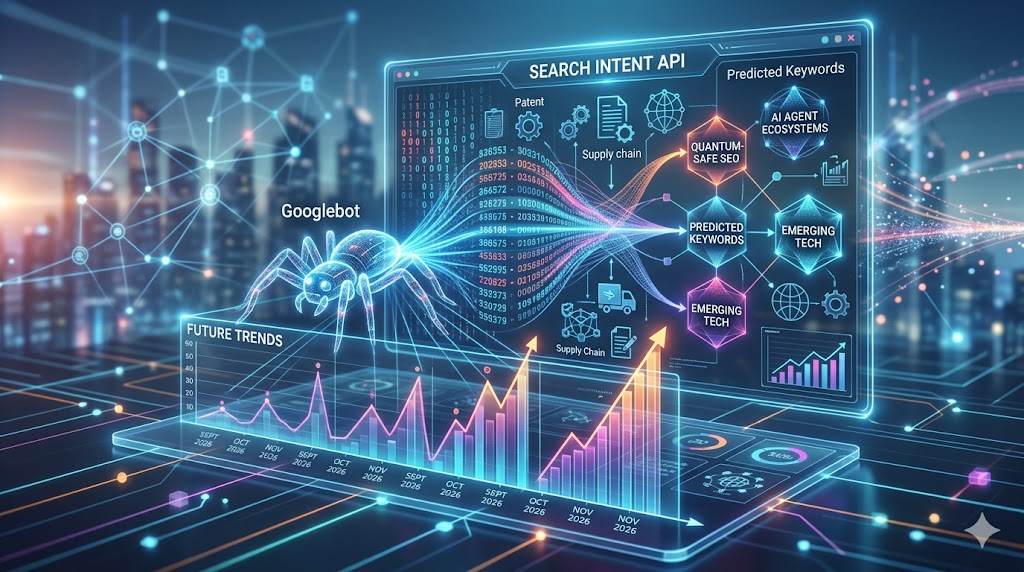
Generated by Gemini
For years, the world of digital publishing has operated on a “reactive” model. A news event happens, a new product launches, or a keyword starts trending, and creators rush to write about it. By the time your article is published and indexed, the market is already saturated. You are fighting for scraps of traffic against established giants.
But the game is changing. We are entering the era of Predictive Indexing. This isn’t just about following a trend; it is about using Google’s own Search Intent data and API-driven insights to understand what people will be searching for next week, not what they searched for yesterday. If you want your website to dominate the rankings, you must stop chasing the algorithm and start leading it. Read
What is Predictive Indexing?
Predictive Indexing is a technical SEO strategy that involves creating content based on forecasted search demand. By identifying “seed signals” through Search Intent APIs and data modeling, creators can publish high-quality content that Google’s crawlers identify as the “authoritative source” just as the search volume begins to spike.
When the trend finally hits its peak, Google doesn’t look for new content; it looks for the content that has already been indexed, aged slightly (giving it “freshness authority”), and proven to satisfy early searchers. This is the “First-Mover Advantage” powered by data science.
The Mechanism: How Google Indexing Really Works in 2026
To understand why this works, we have to look at how Google’s “Crawl Budget” and “Index Priority” function today. Google does not crawl the entire internet every hour. It prioritizes sites that demonstrate Information Gain.
Information Gain is a patent-held concept by Google that rewards content providing new information that isn’t already in its index. If you write the same thing as ten other websites, Google has no reason to index you quickly. However, if you use predictive data to answer questions before they are widely asked, your Information Gain score is massive. Google sees your site as a “Discovery Hub,” prompting faster crawling and permanent indexing.
Step 1: Identifying Seed Signals with APIs
The secret to predictive indexing lies in Search Intent APIs. Tools like Google Trends API, Python-based search scrapers, and fintech data streams provide “leading indicators.”
For example, before a major technology launch, there are thousands of searches for technical documentation, patent filings, and supply chain rumors. These are not “high volume” keywords yet, but they are “intent signals.” By monitoring these low-volume, high-intent signals, you can identify the exact “cluster” of keywords that will explode in 30 to 60 days.
Step 2: Content Architecture for “Crawl-Friendliness”
Once you have your topic, the structure of your post determines how fast it gets indexed. Google’s “Freshness Algorithm” loves specific technical markers:
- Structured Data (Schema.org): Use “NewsArticle” or “TechArticle” schema to tell the bot exactly what the page is about.
- Semantic Connectivity: Don’t just write about one keyword. Connect the topic to established high-authority concepts (e.g., linking Predictive Indexing to Neural Matching).
- The “Summary First” Model: Place a 100-word executive summary at the very top. This allows Google’s “Passage Indexing” to grab the core value of your page in milliseconds.
Step 3: The Role of Search Intent APIs
Modern SEOs are now using custom scripts to pull data from Google’s Search Intent API. This allows you to see the “Delta” (the rate of change) in search interest. A keyword with a volume of only 100 but a growth rate of 500% is more valuable than a keyword with 10,000 volume that is stagnant.
By targeting the “Delta,” you ensure that your website is the primary resource when that keyword eventually hits 100,000 searches. By then, your URL will have accumulated “dwell time” and “backlink equity,” making it nearly impossible for competitors to displace you.
Beating the “Similarity” Trap
One of the biggest reasons websites fail to rank is because they look like everyone else. Google’s “Deduplication” engine often hides search results that are too similar to the top 3 results.
To bypass this, your predictive content must include Unique Data Points. This could be:
- Original charts generated from your data analysis.
- Predictions based on current technological trajectories.
- Case studies or “Hypothetical Implementations” that provide a fresh perspective.
When your content is indexed, Google compares it to its existing database. If your “uniqueness score” is high, you are moved to the top of the index priority list.
Technical Execution: Forcing the Index
Even with great content, you want to ensure Google “sees” you immediately.
- API Pinging: Use the Google Indexing API (typically used for Job Postings and Livestreams) to alert the bot to your new, time-sensitive content.
- Internal Link Velocity: Link to your new “Predictive” post from your highest-traffic pages. This transfers “Link Juice” instantly and tells the crawler that this new page is a high priority.
- Sitemap Optimization: Don’t just wait for a weekly sitemap crawl. Use a dynamic sitemap that updates the
<lastmod>tag and pings search engines the second you hit “Publish.”
The Future of Search: Human-Centric Predictions
As AI-generated content becomes more common, Google is looking for the “Human Signal.” Predictive Indexing works best when it is combined with human insight. While the API tells you what is trending, your expertise tells the reader why it matters.
This combination of data-driven timing and human-authored depth is the “Golden Ratio” for 2026 SEO. It satisfies both the machine (Googlebot) and the human (the reader).
Conclusion: Leading the Digital Narrative
The era of “set it and forget it” SEO is over. To achieve high views and consistent indexing, you must become a “Digital Prophet.” By using Search Intent APIs to identify upcoming trends and publishing deep-dive, high-word-count articles before the competition, you turn your website into an authority.
Predictive Indexing isn’t just a trick; it’s a fundamental shift in how information is organized on the web. Those who master the “Pre-Trend” will own the search results of tomorrow. Start looking at the data, identify the “Delta,” and build your content today for the searches of next month. That is how you win the race for the top spot on Google.
Read Freshworks and the “AI Layoff” Wave