
Top 5 Car Technologies
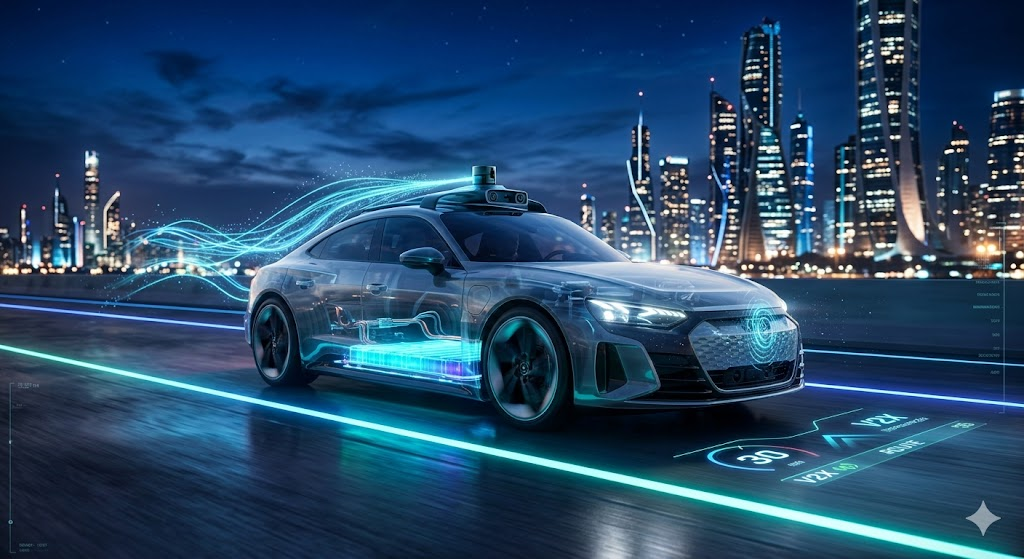
The automotive industry is no longer about just engines and tires. We are living in the era of the “Smartphone on Wheels.” If you are looking to buy a new car or just want to stay updated on how technology is changing travel, you are in the right place.
In this guide, we dive deep into the latest trends that are making cars smarter, cleaner, and faster.
1. The Death of Range Anxiety: Solid-State Batteries
For years, people stayed away from Electric Vehicles (EVs) because they feared the battery would die in the middle of nowhere. In 2026, that fear is disappearing thanks to Solid-State Batteries.
Why is this a Game Changer?
Unlike the old Lithium-ion batteries, solid-state batteries use solid electrolytes. This makes them:
- Faster to charge: 0% to 80% in under 10 minutes.
- Safer: They do not catch fire easily.
- Longer Range: You can drive over 1,000 km on a single charge.
| Feature | Old Lithium-ion | New Solid-State |
| Charging Time | 45 – 60 Minutes | 10 Minutes |
| Fire Risk | Moderate | Very Low |
| Driving Range | 400 km | 1000+ km |
| Weight | Heavy | Light |
2. Software-Defined Vehicles (SDV): Your Car is Now an App
In the past, if you wanted a new feature in your car, you had to buy a new model. Today, your car updates itself overnight using OTA (Over-the-Air) Updates, just like your iPhone.
What can your car update via Software?
- Horsepower: Some companies now allow you to “download” more speed.
- Entertainment: Gaming consoles are being built into the dashboard.
- Safety: New AI algorithms for braking can be installed while you sleep.
Key Term: Digital Twin Technology is now used by manufacturers to simulate how your specific car is wearing down, alerting you to a problem before it even happens!
3. Level 4 Autonomous Driving: Hands Off the Wheel
We have moved past simple “Cruise Control.” We are now entering Level 4 Autonomy. This means the car can handle almost all driving tasks in specific areas (like highways or smart cities) without human intervention.
How it Works: The “Eyes” of the Car
- LiDAR: Uses lasers to create a 3D map of the surroundings.
- Computer Vision: AI cameras that can tell the difference between a plastic bag and a small dog.
- V2X Communication: Your car “talks” to the traffic lights and other cars to prevent crashes.
4. Generative AI Dashboards (ChatGPT for Cars)
Standard voice commands used to be frustrating. You would say “Call Mom,” and the car would play “Jazz music.” That is over.
With Generative AI integration, you can have a real conversation with your vehicle:
- “Hey Car, find a healthy Italian restaurant nearby and book a table for two.”
- “Explain why the engine light is on in simple words.”
- “Tell my kids a bedtime story about space while we drive home.”
5. Hydrogen: The Green Alternative to Batteries
While everyone talks about Electric Cars, Hydrogen Fuel Cells are making a huge comeback, especially for heavy trucks and long-distance travel.
The Benefit? The only waste that comes out of the exhaust pipe is pure water. It takes only 3 minutes to refill a hydrogen tank, which is much faster than charging any battery.
Comparison: Which Tech Should You Choose?
If you are planning to invest in a vehicle this year, refer to this quick guide:
| Technology | Best For… | Current Availability |
| Battery Electric (EV) | City driving & Daily Commute | High |
| Hydrogen (FCEV) | Long Haul & Heavy Loads | Growing |
| Plug-in Hybrid | People with no home charging | Very High |
| Self-Driving AI | Tech enthusiasts & Commuters | Emerging |
Summary: What to Watch For
The biggest shift in 2026 is Connectivity. Cars are becoming part of our “Digital Ecosystem.” Here are the top 3 keywords you should search for when looking for your next ride:
- Sustainability: Look for recycled interiors and carbon-neutral production.
- Safety AI: Look for cars with 360-degree LiDAR coverage.
- Resale Value: Tech-heavy cars hold their value better as they stay “young” through software updates.
Conclusion
The car of 2026 is no longer just a way to get from point A to point B. It is a personal assistant, a sustainable power plant, and a high-speed computer. Whether you love the roar of an engine or the silence of an electric motor, technology is making your journey safer and more fun than ever before.
Want to know which specific brands are leading this race? Subscribe to our newsletter for the latest “Tech-Car” reviews!
Read Master Future
FAQ
Solid-state batteries are designed to be much more durable than current lithium-ion versions. In 2026, these batteries are expected to handle over 5,000 charge cycles, which means the battery could outlast the car itself, potentially covering over 1 million kilometers before significant degradation.
Quick Summary Table for Readers
| Question | Short Answer |
| Best Tech for Range? | Solid-State Batteries |
| Best Tech for Environment? | Hydrogen Fuel Cells |
| Best Tech for Convenience? | Level 4 Autonomy |
| Best Tech for Fun? | Generative AI Dashboards |