
Meta’s AI Evolution
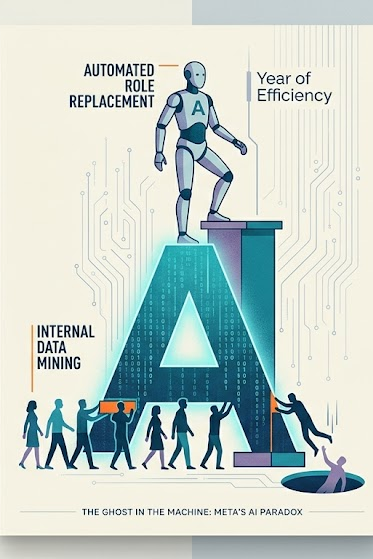
The tech industry is currently witnessing a historic shift in the relationship between humans and machines. Meta is at the center of a controversial strategy. The company is actively using the daily activities, communications, and workflows of its own staff to refine its Generative AI models. At the same time, it is cutting more than 8,000 employees from its payroll. Meta ai training Employee.
This move transforms Meta from a labor-heavy tech giant into an “AI-first” entity. It raises a critical question for the global workforce: What happens when your primary job description is to train your own replacement?
The Internal Data Mine: Feeding the Machine
AI models require vast amounts of high-quality data to function. While public web data exists everywhere, it is often messy and unreliable. Meta views internal corporate data—such as code reviews, project management logs, and specialized technical troubleshooting—as a far more valuable resource.
- Mapping Workflows: Meta’s AI analyzes how top-tier engineers solve complex problems. Through this, it learns “Agentic” behaviors—the ability to plan and execute tasks without human intervention.
- Transferring Expertise: Every interaction an employee has with internal systems serves as a “label” for the AI. Meta is essentially uploading decades of human expertise into a digital brain in just a few months.
The Paradox of the “Year of Efficiency”
Mark Zuckerberg’s “Year of Efficiency” now serves as a blueprint for all of Silicon Valley. The 8,000 layoffs represent a structural change. Meta is phasing out middle management and routine technical roles to make room for automated systems.
This creates a dangerous feedback loop:
- Humans produce high-quality work.
- AI studies that work to mimic the skill.
- The Company terminates the human to reduce overhead.
The Future of Work: Identity in the Age of AI
This trend extends far beyond Meta. From software development to digital marketing, AI is moving from the “assistant” role to the “center” of operations. As corporations prioritize digital efficiency over human capital, the market value of traditional skills is dropping rapidly.
To survive, the modern worker must pivot toward Originality and Strategic Oversight. While AI can replicate patterns, it cannot yet replicate the “Human Spark”—the ability to innovate beyond what is already in the database.
Critical Stakes for 2026
- Data Ethics: Do employees deserve compensation for the “behavioral data” they provide if that data eventually replaces them?
- Digital Sovereignty: As AI takes over content creation, corporations—not individuals—now own the world’s “intelligence.”
- Innovation Risk: If companies remove humans from the cycle, AI faces “Model Collapse.” It will simply repeat old data without ever creating a new idea.
Final Analysis
The Meta layoffs serve as a stark reminder. In the 2026 tech economy, data is the new currency, but companies are treating humans as depreciating assets. The challenge for the future is not just building smarter AI, but building a world that still values human creativity.