

Every year, Google I/O brings something new to the table. But Google I/O 2026 feels different. This year, Google did not just add features to Gemini it rebuilt the entire experience from scratch, gave it a new face, a new brain, and a new purpose.
The name of that new face? Neural Expressive.
It is a design language a set of visual and interactive rules that now governs how Gemini looks and feels across every platform: Android, iOS, and the web. Starting today, May 19, 2026, the rollout is live globally. If you open your Gemini app and it looks different, that is exactly why.
But the design is only one part of the story. Google also announced a new AI agent called Gemini Spark, a new model called Gemini 3.5 Flash, a multimodal video powerhouse called Gemini Omni, and a smarter daily summary tool called Daily Brief. It was one of the most packed Google I/O keynotes in recent memory.
Let us break it all down simply, clearly, and completely.What Is “Neural Expressive” and Why Does It Matter?
If you have used Android recently, you may have heard of “Material Expressive,” Google’s modern design system for Android apps. Neural Expressive is Gemini’s own version of that — built specifically for AI-first interaction.
The idea is simple: AI responses should not feel like reading a textbook. They should feel alive, clear, and human.
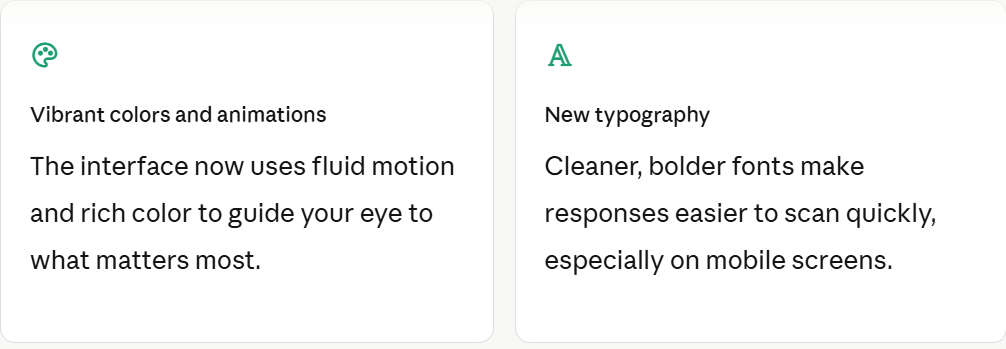
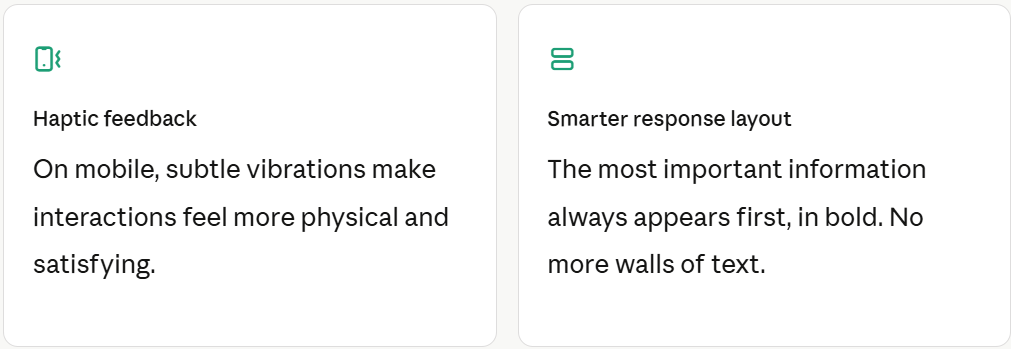
Here is what Neural Expressive actually changes inside the Gemini app:
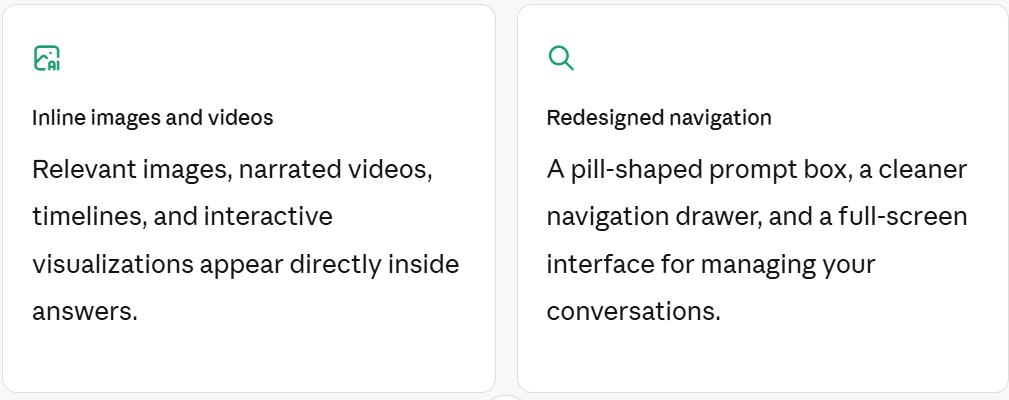
The navigation drawer is now a full-screen interface with a thinner icon set. You will find New Chat, Search Chats, Library (previously called “My Stuff”), Gems, Notebooks, and Recent all from one place. Your profile and settings sit at the bottom.
On mobile, the prompt input area has a single “plus” button that opens a bottom sheet. From there, you can choose Photos, Camera, recent images, or scroll down for Files, Google Drive, and Notebooks. Your tools — including Guided Learning, Deep Research, Canvas, Create Music, Create Video, Create Image, and Personal Intelligence — are all one tap away.
Quick summary: Neural Expressive makes Gemini look better, feel better, and respond in a way that is easier to understand. It is not just a coat of paint — it changes how information is delivered to you. Responses now have visual hierarchy, not just text. They show what matters first.
Gemini Spark: Your Personal AI That Never Sleeps
This is the announcement that will define Gemini in 2026 and beyond.
Google introduced Gemini Spark — described simply as “your personal agent.” But what does that actually mean?
Spark is not an assistant that waits for you to ask a question. It is an agent that works independently on your behalf, around the clock, on dedicated Google Cloud virtual machines. You give it a task, and it goes and does it — even while you are sleeping, working, or doing something else entirely.
“Spark represents a big shift for Gemini — transforming it from an assistant that can answer your questions into an active partner that does real work on your behalf and under your direction.”
Spark integrates directly with Gmail, Google Docs, and other Workspace apps first. Later this summer, it will expand to third-party tools through MCP (Model Context Protocol).
What can Gemini Spark actually do?
The real-world examples Google shared paint a clear picture:
- Finance taskAutomatically parse your monthly credit card statements and flag new or hidden subscription fees you may have missed.
- Family taskMonitor your inbox for updates from your children’s school, extract important deadlines, and send you and your partner a single daily digest.
- Work taskSynthesize meeting notes from across emails and chats, create a polished Google Doc with key findings, and draft the follow-up email to kick off a project — all without you lifting a finger.
- Creative taskPlan an entire block party — from invites to itinerary — when given a simple prompt.
For high-stakes actions — sending emails, spending money — Spark will always ask for your confirmation first. Google built this check in deliberately. You are always in control.
Spark runs on Gemini 3.5 Flash with Google’s full Antigravity 2.0 harness. It can handle what Google calls “long horizon tasks” — multi-step work that plays out over time, not just a single answer to a single question.
On mobile, you will interact with Spark through a new interface called Android Halo. It lives at the top of your phone screen and shows you live updates on what Spark is doing — even when you are using a completely different app.
Gemini Spark will be available to Google AI Ultra subscribers in the United States starting next week. Broader availability will follow.
Gemini 3.5 Flash: The Model Behind All of This
All of these new features need a powerful model to run on. That model is Gemini 3.5 Flash.
Google announced that Gemini 3.5 Flash combines what they call “frontier intelligence” with the ability to perform agentic tasks — meaning it can take actions in the world on your behalf, not just answer questions.
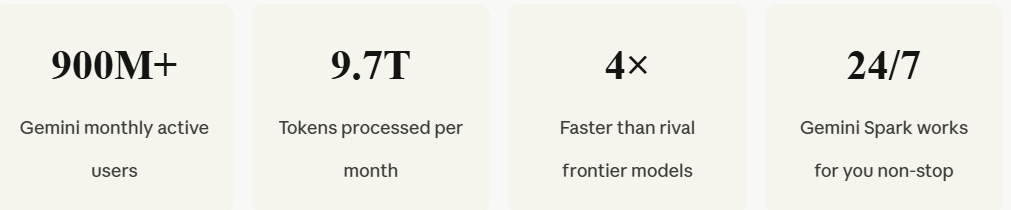
Gemini 3.5 Flash outperforms Gemini 3.1 Pro across three key areas: coding, agentic tasks, and multimodal understanding. And it is four times faster than other frontier models in terms of output tokens per second — which in plain language means its answers arrive faster, and complex tasks complete sooner.
The model is already rolling out today across the Gemini app, Google Search, and the Gemini API for developers.
Gemini 3.5 Pro is currently in internal testing and is expected to arrive next month.
Gemini Omni: AI That Creates and Edits Real Video
Gemini Omni is a new series of models that blends reasoning with creation. What sets it apart from everything that came before is its deep, native understanding of video — not just images or text.
With Gemini Omni, you can upload video footage from your camera roll and edit it using natural language. No traditional editing tools, no timeline scrubbing, no technical skills required. You describe what you want, and Omni does it.
Want to rotate the camera angle on a scene? Done. Want to add a character to the background? Done. Want to transform your home video into something that looks cinematic? Done.
Google also announced that you will be able to create a custom AI avatar that looks and sounds like you — which can then be dropped into different scenes and scenarios.
Gemini Omni (Flash version) is rolling out today to Google AI Plus, Pro, and Ultra subscribers worldwide. It accepts image, audio, video, and text as input. Every generated video is automatically fingerprinted with Google’s SynthID watermark for authenticity verification.
Daily Brief: Your Morning Intelligence Report
Alongside Spark and Omni, Google also upgraded Daily Brief — an AI-powered feature that finds the most important information across your personal data and delivers it in a clear, digestible format every day.
Think of it as a morning briefing that Gemini prepares for you — pulling from your emails, calendar, documents, and connected apps — so you start every day already knowing what matters.
Daily Brief is part of the broader vision Google is building: Gemini as a layer that sits across your entire digital life, not just a chat box you open when you have a question.
Gemini Live: Now Inline, Not Full-Screen
Gemini Live — the conversational voice mode — has also changed in a meaningful way. Previously, activating Gemini Live launched a full-screen experience that took over your phone. Now, it opens inline, right within the main Gemini interface.
This means you no longer have to explicitly switch between modes. You can move between text and voice naturally, without the conversation being interrupted or the screen changing dramatically.
It is a small change that makes the interaction feel much more natural — more like talking to someone than toggling between different tools.
Gemini Is Coming to macOS
Until now, Gemini’s dedicated app experience has been mobile-first. That changes today. Google announced a native Gemini app for macOS, bringing all the new agents, features, and Neural Expressive design to Apple computers for the first time.
If you are an Apple user who primarily works on a MacBook, you will now be able to access Gemini Spark, Daily Brief, Gemini Live, and all the other new features without opening a browser.
Everything Else Announced at Google I/O 2026
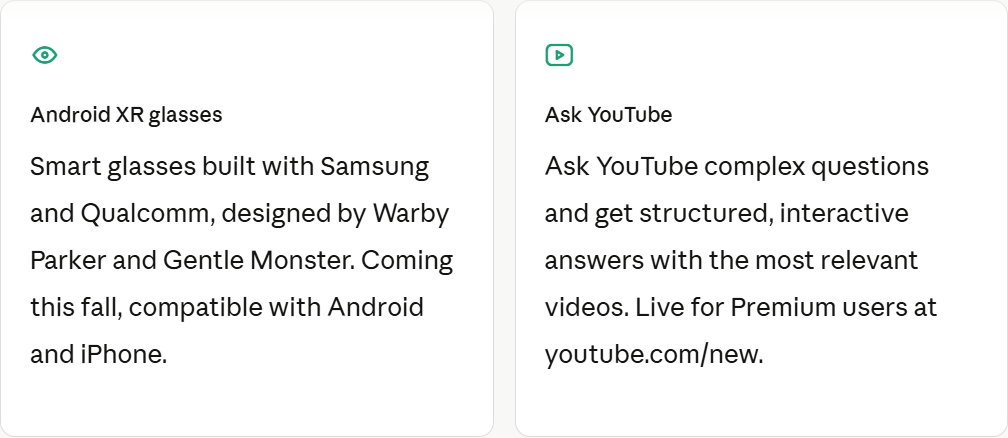
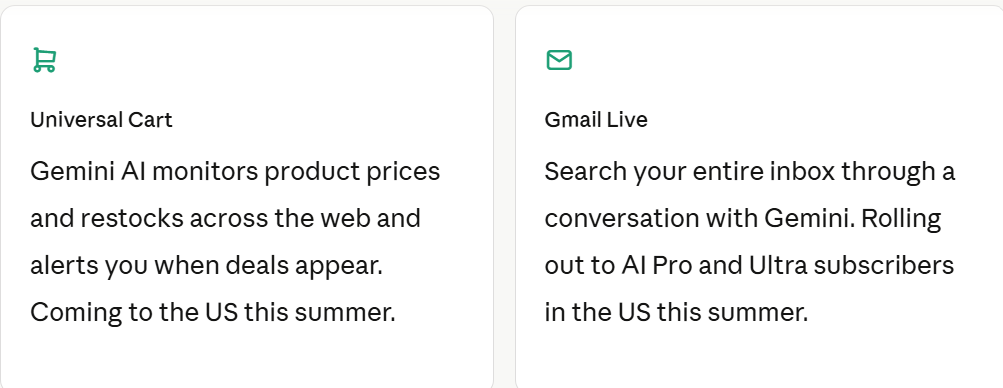
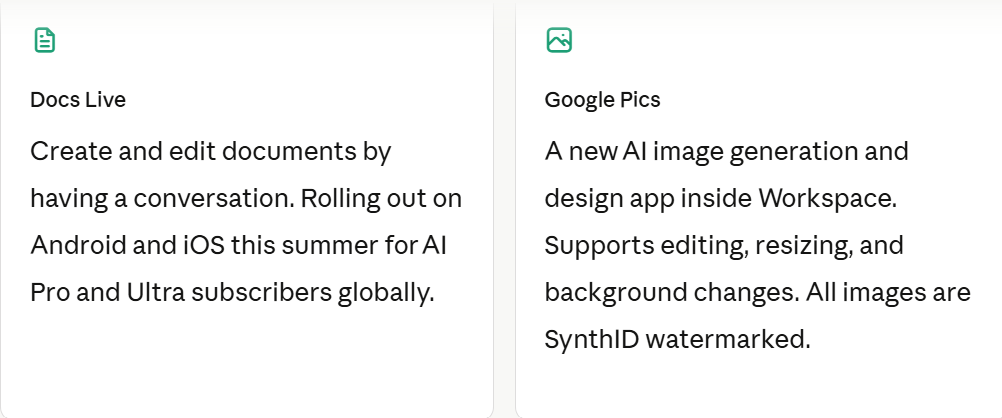
Gemini was clearly the star of Google I/O 2026, but it was not the only headline. Google also announced:
What Does All of This Mean for You?
It means Gemini is no longer just a chatbot. It is becoming an operating layer for your digital life.
The Neural Expressive redesign makes it easier to use and understand. Gemini Spark makes it work for you without being asked. Gemini 3.5 Flash makes it smarter and faster. Gemini Omni gives it the power to create things you could not easily create before. And Daily Brief keeps you informed without requiring effort.
Google now has over 900 million people using Gemini every month. That number is likely to grow significantly as these features reach users globally over the coming weeks.
The question is no longer whether AI assistants are useful. The question is how deeply they will become part of everyday life — and based on what Google showed today, the answer is: more deeply than most people expected, and sooner than most people imagined.
Rollout status as of May 19, 2026: Neural Expressive is live now on Android, iOS, and web. Gemini 3.5 Flash is live in the Gemini app, Google Search, and the API. Gemini Omni (Flash) is live for Plus, Pro, and Ultra subscribers. Gemini Spark arrives next week for Ultra subscribers in the US. Gmail Live, Docs Live, and Android XR glasses are coming later this summer and fall.
FAQ
Read More