
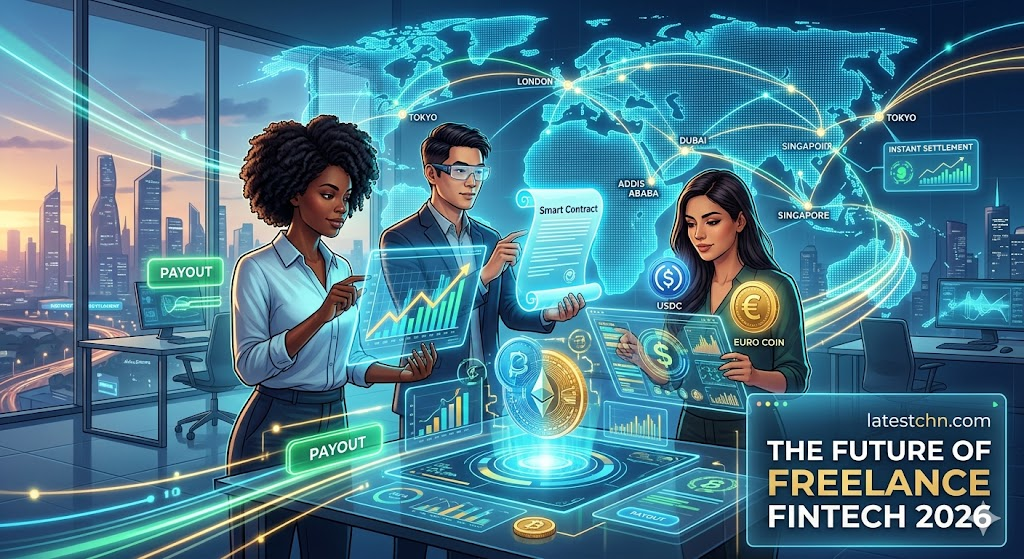
The traditional 9-to-5 office model no longer serves as the standard for the global workforce. Instead, the “Freelance Revolution” has permanently shifted the global economy rather than acting as a temporary trend. However, a simple desire for flexibility is not the true catalyst behind this massive movement. Rather, the incredible leap in Financial Technology (Fintech) drives this shift.
Today, independent professionals use advanced tools like decentralized payment gateways and AI-driven tax automation. Consequently, these innovations have completely eliminated traditional barriers to entry. In this comprehensive guide, we explore the top fintech innovations that make freelancing more secure, more profitable, and more accessible than ever before.
1. The Death of the “Wait for Payment” Era: Real-Time Settlements
For decades, the biggest struggle for freelancers involved long delays in payments. Specifically, Net-30 or Net-60 payment terms often left creators stuck in a “cash-flow desert.” Fortunately, Real-Time Settlement (RTS) protocols successfully solve this problem. We can look at this breakthrough through two primary lenses:
Programmable Payments and Smart Contracts
As noted above, blockchain-based smart contracts make payments truly “programmable.” Instead of waiting for a manual bank transfer, freelancers secure their payment in an escrow-style smart contract at the start of a project. Consequently, the moment the client verifies and accepts the digital asset—whether code, design, or text—the contract releases the funds instantly to the freelancer’s digital wallet.
Cross-Border Frictionless Transfers
In addition to instant timing, modern tech resolves international friction. Traditional wire transfers often lost 5% to 10% of their value due to intermediary bank fees and poor exchange rates. Today, however, stablecoin-based payment rails—using USDC or specialized regional digital currencies—allow a developer in Nairobi to receive full payment from a client in London. As a result, workers enjoy near-zero fees and zero delay.
2. Decentralized Finance (DeFi) for the Independent Worker
Historically, freelancers struggled to access traditional banking services. Indeed, without a “steady paycheck stub,” securing a mortgage, a car loan, or even a basic credit card felt nearly impossible. Thankfully, Decentralized Finance (DeFi) has completely rewritten these rules.
On-Chain Credit Scoring
Your “creditworthiness” no longer depends solely on a centralized bank. Instead, DeFi protocols analyze your “on-chain” history, including your consistent project completions, contract interactions, and digital wallet health. Therefore, independent professionals can easily access under-collateralized loans and high-yield savings accounts that traditional institutions previously reserved for corporate entities.
Crypto-Collateralized Lending
Furthermore, freelancers can now leverage their digital assets, such as high-value NFTs or earned cryptocurrencies, as collateral to borrow liquid capital. Ultimately, this strategy provides the necessary liquidity to scale a freelance business—allowing you to buy better hardware or hire sub-contractors—without selling off your long-term investments.
3. The AI Accountant: Automating the “Boring Stuff”
In addition to this, Fintech in 2026 isn’t just about moving money; it’s about managing it. The rise of Autonomous Accounting has saved the average freelancer over 200 hours of administrative work per year. This is making it smart and let’s see how it’s done.
Real-Time Tax Slicing
Let we see The Modern fintech apps now automatically “slice” a percentage of every incoming payment and move it into a dedicated tax vault. Using AI to track regional tax laws (including specific updates in the African Union and EU), these apps calculate self-employment taxes in real-time, ensuring that “Tax Season” is no longer a source of anxiety.
Automated Expense Categorization
By linking your business digital wallet to an AI accountant, every purchase from a new software subscription to a coworking space fee is automatically categorized and optimized for tax deductions. The AI even cross-references your calendar to identify which business meals or travel expenses are legally deductible.
4. The Rise of “Solopreneur” Fintech Platforms
We are seeing the emergence of “all-in-one” platforms that treat a single freelancer as a complete corporation. These platforms provide:
- Virtual Corporate Cards: Instantly generated digital cards for specific project budgets.
- Embedded Insurance: Micro-insurance policies that cover “Professional Liability” or “Health Coverage” on a month-to-month basis, specifically tailored for the gig economy.
- Fractional Equity Management: Tools that allow freelancers to accept “equity” or “tokens” in a startup as part of their payment, with automated vesting schedules.
5. Micro-Payments and the “Pay-Per-Task” Economy
The “Project” model is evolving into the “Micro-Task” model. As AI begins to handle large portions of work, freelancers are often hired for high-level “human-in-the-loop” verification. Fintech enables this by allowing Micro-payments payments of less than $1 to be sent efficiently. This allows for a granular economy where you can be paid $0.50 for every AI-generated image you refine or $2.00 for every paragraph of code you audit, with all earnings accumulating in real-time.
6. Security and Fraud Prevention in the Digital Economy
As the volume of freelance transactions grows, so does the risk of fraud. Fintech in 2026 uses Biometric Identity Verification linked to decentralized identifiers (DID).
- Anti-Ghosting Protocols: Clients can verify that the freelancer they hired is actually the one doing the work through periodic biometric check-ins.
- Dispute Resolution DAOs: If a conflict arises between a client and a freelancer, instead of expensive legal fees, the case is sent to a Decentralized Autonomous Organization (DAO). A jury of peer freelancers reviews the evidence and votes on the outcome, with the decision enforced automatically by the smart contract.
7. The Social Impact: Financial Inclusion in Emerging Markets
The most profound impact of freelance fintech is felt in emerging tech hubs. In regions where the local banking infrastructure might be slow or unstable, digital finance provides a gateway to the global market.
- Direct Access: A writer can earn “hard currency” (stablecoins) without needing a local USD bank account.
- Inflation Protection: By holding earnings in stable digital assets, freelancers can protect their purchasing power against local currency fluctuations.
8. Looking Ahead: The Metaverse and Virtual Commerce
By the end of 2026, we expect the first “Metaverse Payroll” systems to become mainstream. As freelancers begin to work in virtual spaces designing 3D environments or providing virtual consultancy the fintech tools of the future will need to bridge the gap between virtual “in-world” currencies and real-world utility.
9. Conclusion: The Era of Financial Sovereignty
The combination of Fintech and Freelancing has created a new class of worker: the Sovereign Professional. You are no longer dependent on a single employer, a single bank, or even a single national economy. You are a global entity, powered by code and secured by math.
The revolution isn’t coming; it’s already here. The question is: are you using the right tools to navigate it?
Read More Latestechn