
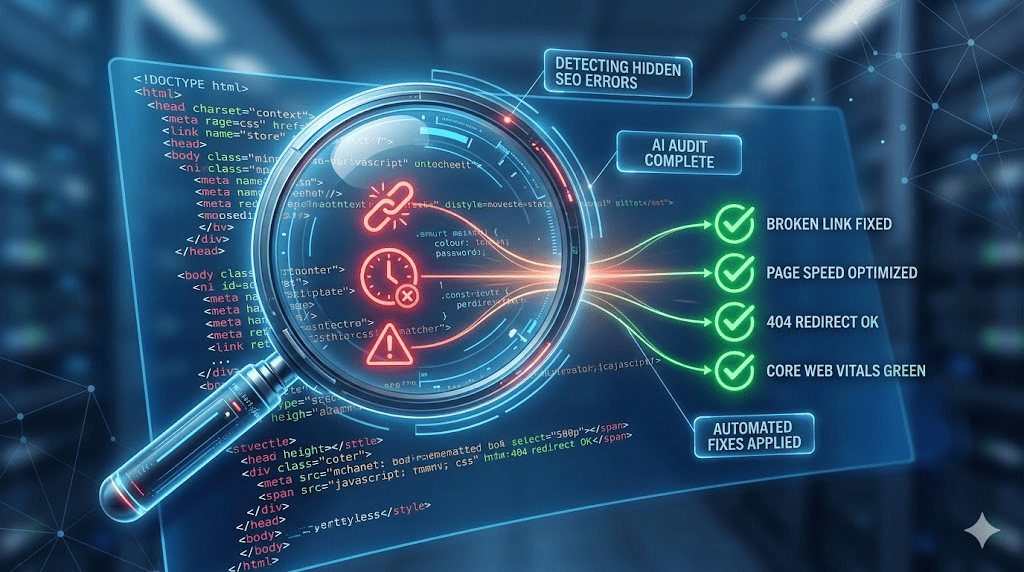
from the internet
You’ve written the content, optimized your keywords, and hit publish—but your traffic graph is flat. For a new website, this is the most frustrating stage of growth. In 2026, Google has moved beyond simple keyword matching. The algorithm now uses AI-driven intent analysis and technical “trust signals” to decide who gets the top spot. neweradigital.ie
If your site is stuck on page 10, it is likely because of one (or all) of these three hidden errors.
1. The “Ghost Indexing” Trap (Technical Blockers)
One of the most common reasons a website fails to rank isn’t the content; it’s that Google literally cannot “see” it properly. If your technical setup is broken, you are invisible.
- Hidden CSS & JavaScript: If your site hides important components like CSS or JS, Google’s bots can’t understand your page layout or functionality.
- Improper Indexing Settings: A single “noindex” tag accidentally left in your settings from the development phase can tell Google to ignore your entire site.
- Orphan Pages: If you have pages with zero internal links pointing to them, search engines struggle to find and crawl them, leading to weak or non-existent rankings.
The Fix: Run a technical audit using Google Search Console to check for “Crawl Errors” and ensure your Sitemap is correctly submitted and active.
2. Failing the “Core Web Vitals” 2026 Standard
In 2026, page speed is no longer a “bonus”—it is a strict ranking requirement, especially on mobile devices. Google uses three specific metrics, known as Core Web Vitals, to measure your user experience:
- LCP (Largest Contentful Paint): How fast your main content loads. It must be under 2.5 seconds.
- INP (Interaction to Next Paint): How quickly your site responds when a user clicks a button. In 2026, this must be under 200 milliseconds.
- CLS (Cumulative Layout Shift): Does your content “jump around” while loading? This creates a bad experience and a lower ranking score.
The Fix: Use modern image formats like WebP, enable browser caching, and reduce heavy third-party scripts or plugins that slow down your mobile loading times.
3. Misaligned Search Intent (The “Helpful Content” Filter)
The biggest SEO mistake in 2026 is targeting keywords without understanding the purpose behind the search. Google now categorizes every query into four buckets: Informational, Navigational, Commercial, or Transactional.
If you write a “Commercial” sales page for a keyword where users are looking for “Informational” tips, Google will never rank you. Furthermore, if your content looks like generic, unedited AI output, the “Helpful Content” filter will flag it as low-value and demote it.
The Fix: Search for your target keyword yourself. Look at the top 3 results. Are they long guides? Short lists? Video tutorials? Your content must match the format and intent that Google is already rewarding.